
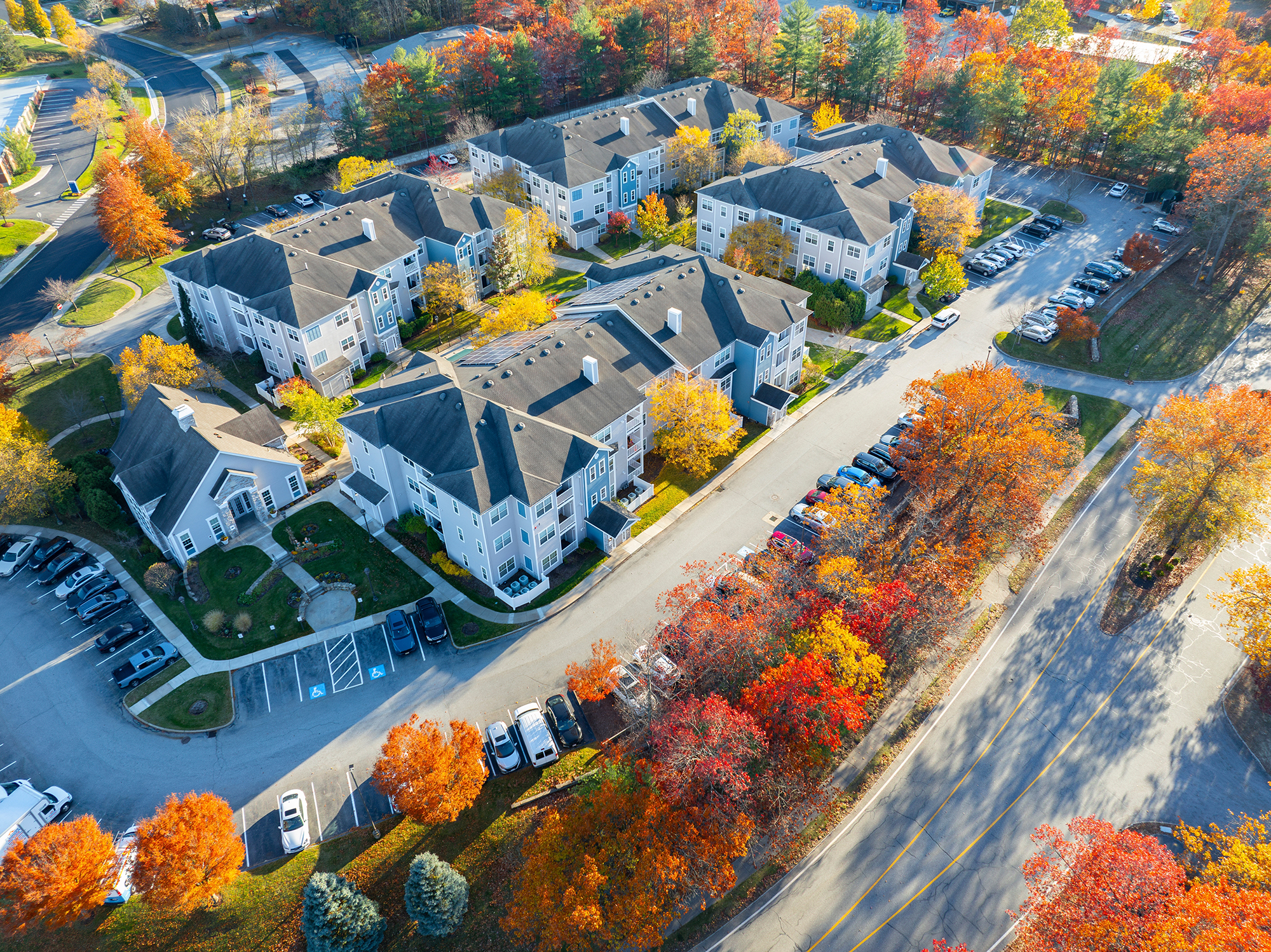
As temperatures begin to drop in Colorado, it’s time for community board members to start thinking about fall prep before the first freeze. Scheduling the right HOA lawn care services now helps protect the grass during winter, prevents frozen irrigation pipes, and prepares the community for a healthy spring without costly repairs. We’ll cover the five top services to prioritize in the fall, when to schedule them, and what can happen if they are overlooked.
Why Fall Is the Most Important Season for HOA Lawn Care Services
Fall maintenance sets the foundation for how a community’s lawn performs through every other season. As temperatures drop in the fall, bluegrass and fescue slow their above-ground growth and focus on building deeper, stronger roots. This natural process works well with services like aeration, fertilization, and overseeding, helping your lawn become thicker and greener by spring. Fall is also the best time to treat perennial weeds. Applying herbicide in fall lets it reach the roots, making it more effective than spring treatments.
Irrigation systems also require attention. If water remains in the lines when the first hard freeze occurs, it can cause pipes and valves to crack, damage that’s easily avoided with a properly timed blowout. The window for proper maintenance closes quickly, often within a few weeks before the first freeze. A board that schedules fall maintenance ahead of time will have less to fix in the spring, since the foundation has already been treated. This is one reason a board benefits from ongoing commercial lawn management, since a single provider tracks the freeze timeline and irrigation schedule together rather than leaving it to chance.
5 Lawn Care Services to Schedule This Fall
A few helpful services create a good fall care plan for HOA properties. Each service helps protect grass, flower beds, and sprinkler systems during the winter.
Core Aeration
Colorado soil is mostly clay that compacts easily under heavy foot traffic and mowing, restricting water, air, and nutrients to turf roots. Core aeration in fall relieves this compaction, opening channels for fertilizer and overseeding. Skipping aeration for years can lead to turf needing 6- to 12-inch clay pulls to recover and increases disease risk.
Fall Fertilization
Fertilizing in the fall provides the grass with the nutrients it needs to develop strong roots before winter. This helps the turf stay healthy during dormancy and prevents it from focusing on new top growth, which could be damaged by frost. According to fall fertilization timing for Colorado lawns, the ideal nitrogen application window for bluegrass lawns at lower elevations runs from late September through early November. Communities that fertilize on this schedule tend to see denser, greener turf the following spring, along with fewer weeds competing for space.
Irrigation System Blowouts
Colorado’s freeze-thaw cycles make irrigation blowouts one of the most important fall services on this list. Any water left in the lines when temperatures drop can freeze, expand, and crack pipes, valves, or backflow devices. A professional blowout clears the system with compressed air before the first hard freeze, protecting the investment already made in the property’s irrigation infrastructure and avoiding a costly spring repair bill.
Leaf and Debris Cleanup
Fallen leaves left on turf block sunlight, trap moisture, and create the damp, shaded environment that invites mold and fungal disease. Regular commercial lawn care and grounds maintenance through the fall keeps common areas, walkways, and entrances clear of buildup. Besides the health of the turf, clogged storm drains and gutters caused by unmanaged leaf debris can result in water pooling and erosion around the property, creating additional maintenance problems.
Weed Control Before Dormancy
Perennial weeds absorb nutrients into their roots in the fall, just like turf does. This makes fall the best time of year to treat them. Applying herbicide in the fall allows the chemicals to move down into the roots along with the nutrients. This is much more effective than spring treatments, which happen after the weeds have gone dormant or just started growing again. By timing weed control for this window, you’ll usually see a cleaner lawn next season with fewer weeds competing with new grass growth.
When to Start: Timing Fall Prep Around Colorado Weather
Colorado’s frost usually hits in early to mid-October across the Denver area, depending on elevation. That date acts as a deadline for scheduling HOA lawn care services, and everything below needs to happen before it lands:
- Aeration, fertilization, and overseeding — these need warm soil to work, so they have to be scheduled well before the first frost, not after.
- Irrigation blowouts — ideally done by September or early October, since waiting on a forecast to confirm the exact freeze date cuts it too close.
Since these services have a small time window, the main risk isn’t choosing the wrong service, but starting too late. Boards that select a provider early avoid last-minute rushes. Communities that work with an established HOA landscaping contractor typically don’t need to worry about timing because it’s already included in their service schedule.
How Neglecting Fall Prep Shows Up Next Spring
Skipping fall prep does not save a community money. It defers the cost, and usually increases it. Three consequences tend to show up by spring:
- Turf decline — lawns that miss aeration or fertilization come out of winter thin and patchy, more vulnerable to disease, often requiring a full spring renovation instead of routine maintenance.
- Irrigation damage — systems that never got a blowout tend to surface cracked pipes or blown valves the moment you turn them back on, turning a preventable task into an emergency repair.
- Weed regrowth — weeds left untreated in the fall come back stronger and denser, requiring more aggressive, more expensive treatment to regain control.
Add the labor costs for catching up on leaf and debris cleanup that accumulated over the winter. As a result, a board might end up spending more on addressing these issues than it would have on regular proactive HOA landscape maintenance. Fall prep is one of the few property investments that usually pays for itself by spring.
Let Absolute Lawncare Handle Your HOA’s Fall Prep
Fall lawn care for an HOA property involves many moving pieces, and getting the timing right across aeration, fertilization, irrigation, and cleanup takes coordination most boards don’t have time to manage on their own. Absolute Lawncare has served commercial and HOA communities across the Denver area since 2007, providing HOA lawn care services built around Colorado’s clay soil and tight frost timeline.
If your board is comparing commercial lawn maintenance companies for the season ahead, Absolute Lawncare provides a detailed, written scope of work with every quote, so your community knows exactly what’s included before the first frost hits.
Ready to lock in your community’s fall schedule? Contact Absolute Lawncare today to get started.